New York Service Dog Laws: What State Law Adds to the ADA
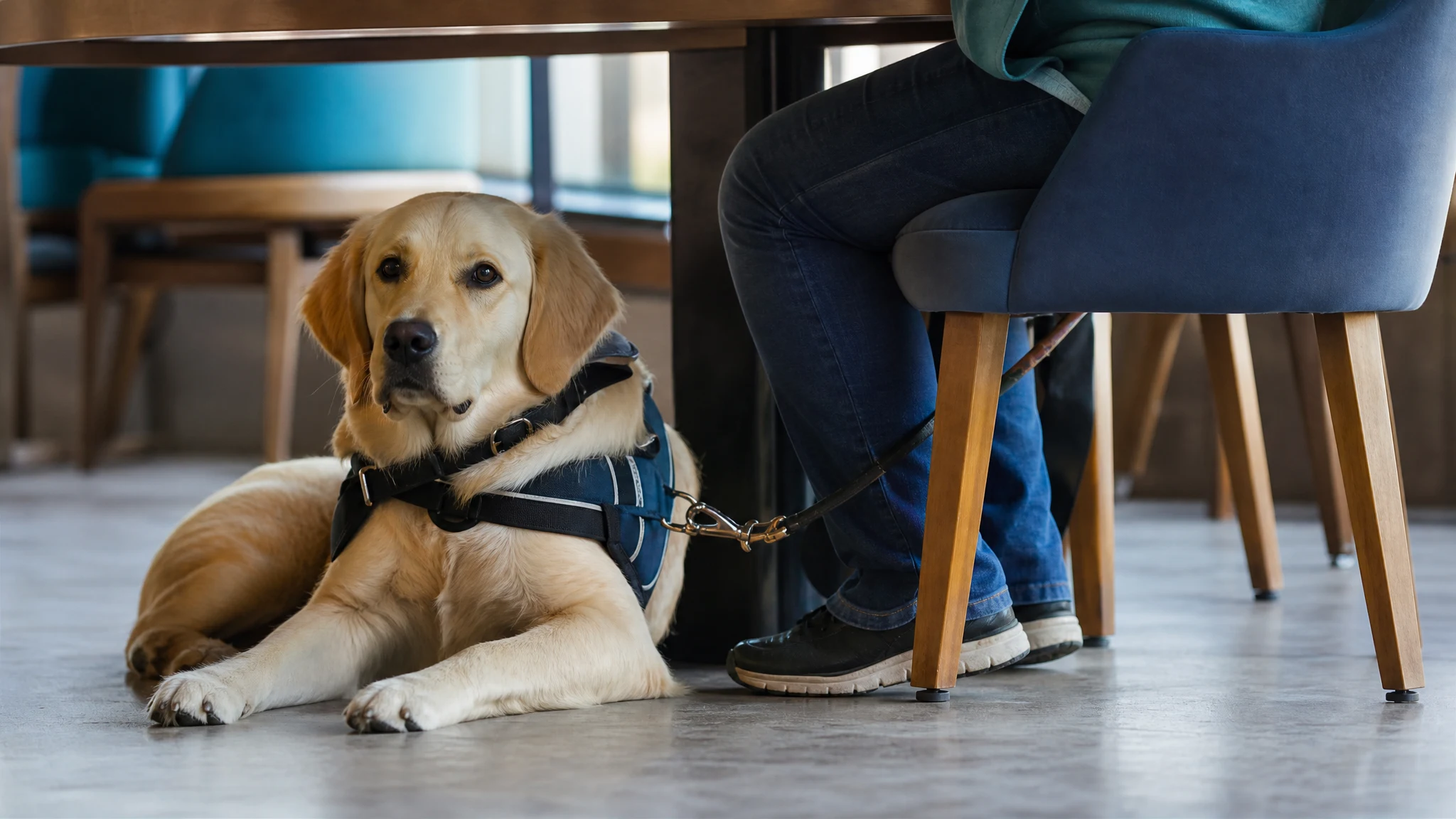
This page explains the law in general terms. It is not legal advice. For a specific situation, contact the agency listed on this site or an attorney.
New York service dog laws work alongside the federal Americans with Disabilities Act (ADA). The two overlap a lot, but they are not identical. The state statutes cover some situations the ADA does not, such as dogs in training, and they set their own penalties.
This guide walks through the New York statutes in order: the definition, public places, penalties for denying access, housing and employment. For each rule it gives the citation. Where the state is silent, it says so. It is a plain-English explainer, not legal advice.
What you need before you start
- The federal baseline: the ADA.gov page on service animal requirements.
- The New York statutes: Civil Rights Law Article 4-B (§§ 47, 47-a, 47-b, 47-c), Executive Law § 296, Agriculture & Markets Law §§ 108 and 110, and Penal Law §§ 242.05 and 242.10, all on the NY Senate Open Legislation site.
- The complaint agency: the New York State Division of Human Rights.
- A note of your own situation: the kind of place (store, apartment, workplace, transit), whether the dog is fully trained or in training, and the disability-related task the dog performs.
You do not need a registration, certificate or ID card. Neither the ADA nor the New York statutes below create one.
Step 1: Start with the federal definition
ADA.gov says service animals are dogs individually trained to do work or perform tasks for people with disabilities. Dogs whose sole function is comfort or emotional support do not qualify (ADA.gov, ADA Requirements: Service Animals).
This is the line the state definitions build on. A service dog is defined by the work or task it has been trained to do, not by its breed, its vest or a document.
Tip: Keep the categories exact. Emotional support, therapy and comfort animals are not service animals under the ADA.
Step 2: Read New York's definition
New York has two definitions, in two different laws.
- Civil Rights Law § 47-b. It defines "service dog" by reference to the federal ADA regulations. That means a dog under the control of the person using or training it, which has been or is being individually trained to do work or perform tasks for a person with a disability. Guide dogs and hearing dogs are defined separately. Disability has the meaning in Executive Law § 292(21).
- Agriculture & Markets Law § 108(22). A "service dog" is any dog that has been or is being individually trained to do work or perform tasks for a person with a disability. The guide dog definition in § 108(9) and the hearing dog definition in § 108(21) include dogs being trained or bred for that purpose.
Where the state is silent: none of these definitions mentions psychiatric or emotional support. Therapy dogs are a separate category in Agriculture & Markets Law § 108(26). The article also speaks only of dogs, so the service dog rules in Article 4-B are not written for other species.
Common mistake: assuming a dog that provides comfort counts. Under both the ADA and these definitions, the key is individual training to do work or tasks.
Step 3: Know the public access rule
Civil Rights Law § 47 bars denying anyone admittance to, or equal use of, any public facility because they are accompanied by a guide, hearing or service dog. The statute says "public facility" expressly includes all modes of public and private transportation and all forms of public and private housing accommodations (NY Senate Open Legislation, Civil Rights Law § 47).
Civil Rights Law § 47-b adds two protections. There can be no extra charge for admitting the dog, and the person has the right to keep the dog in immediate custody.
Executive Law § 296(14) reaches the same conduct from the discrimination side. Denying access, or discriminating, because a person is accompanied by a trained dog is an unlawful discriminatory practice.
The ADA.gov guidance gives staff two questions they may ask when it is not obvious what the dog does:
- Is the dog a service animal required because of a disability?
- What work or task has the dog been trained to perform?
For the full federal rules on what a business may ask and when a dog may be removed, read the ADA.gov FAQ on service animals. The New York sections quoted here do not repeat those details.
Tip: Say what the dog does for you in a sentence or two. You do not need to show paperwork or explain the disability itself.
Step 4: Check the rule for dogs in training
This is the biggest difference from the federal law. ADA.gov states that the ADA does not cover service animals in training. New York state law does.
Civil Rights Law § 47-b(3) gives a person engaged in training a dog to guide or otherwise aid persons with a disability, while engaged in that training, and the person for whom the dog is being trained, the same rights and privileges as persons with a disability under Article 4-B. The section is not limited to professionals. It also contains no age, harness or ID condition.
Executive Law § 296(14) is narrower in its wording. It protects a "professional guide dog, hearing dog or service dog trainer," whether or not accompanied by the person for whom the dog is being trained.
So the two laws describe trainers differently. The Civil Rights Law covers any person training a dog, while the Human Rights Law names professional trainers. If you are an owner-trainer, rely on the text of § 47-b(3) and check with the Division of Human Rights about how it applies to your situation.
Common mistake: treating a pet in basic obedience class as a dog in training. The statute speaks of training a dog to aid persons with a disability, while engaged in training activities.
For program options and costs in the state, see service dog training in New York: laws, programs and costs.
Step 5: Understand the penalties for denying access
Civil Rights Law § 47-c sets the penalties for violating Article 4-B.
- A violation of Article 4-B is a violation, the lowest level of offense under state law.
- Violating § 47 or § 47-b(1)-(2) two or more times within two years is a violation punishable by a $1,000 fine.
Those penalties are about denying access or charging extra. Separately, Penal Law § 242.05, "Interference, harassment or intimidation of a service animal," is a class B misdemeanor. Penal Law § 242.10, "Harming a service animal in the second degree," covers causing physical injury or death and is a class A misdemeanor (NY Senate Open Legislation, Penal Law §§ 242.05 and 242.10).
Where the state is silent: none of the sections cited here creates a penalty for passing off a pet as a service dog. The § 47-c penalty applies to denying access, not to misrepresentation. If you need current information on proposed changes, check with the New York State Senate and Assembly.
Step 6: Apply the housing rules
Two parts of state law reach housing.
- Civil Rights Law § 47(2). Because "public facility" includes all forms of public and private housing accommodations, the guide, hearing and service dog access rule applies to housing.
- Executive Law § 296(18)(2) and § 296(2-a)(d)(2). The first covers housing accommodations and the second publicly-assisted housing. Both make refusing reasonable accommodations, including the use of an animal to alleviate symptoms or effects of a disability, an unlawful discriminatory practice.
The Executive Law language is broader than the service dog rules. It speaks of an animal used to alleviate the effects of a disability, not only a dog trained for tasks. Whether a particular animal qualifies is a question for the Division of Human Rights or a lawyer. Federal housing rules are handled by HUD, so check with that agency for the federal side.
Tip: Put a housing request in writing and keep a copy. Reasonable accommodation questions turn on facts, so your record helps.
Step 7: Apply the employment rule
Civil Rights Law § 47-a says no otherwise qualified person may be denied equal opportunities to obtain or maintain employment solely because they are a person with a disability accompanied by a guide, hearing or service dog.
There is a condition. Under § 47-b(1), for purposes of § 47-a employment, the dog must have been trained by a qualified person.
The statutes cited here do not say how an employer must handle a dog's presence on a given job site, such as a food area or a safety-sensitive area. That is a fact-specific question. Ask the Division of Human Rights.
Step 8: Remember what the state does not require
- No state registry or ID. No state service dog registry, ID or tag program appears in the statutes cited here.
- Local license fees. Agriculture & Markets Law § 110(2) lets municipalities, at their option, exempt guide, hearing, service, war, working search, detection, police work and therapy dogs from local dog license fees. Because the exemption is optional, fees vary by locality. Contact your city or town clerk.
Common mistake: paying a website for a "registration" or "certificate." Online registrations are not legal proof of anything under the ADA or the New York statutes.
Step 9: Know where to go if access is denied
- Stay calm and state, in plain words, that the dog is a service dog and what task it performs.
- Write down the date, place, person, and what was said.
- Ask for the policy in writing if the denial comes from a business.
- File a complaint with the New York State Division of Human Rights at dhr.ny.gov/complaint.
- For federal issues, use the ADA.gov complaint information.
Check filing deadlines and procedures with the agency directly, since they are not set out in the sections cited here.
Quick comparison: ADA and New York
| Topic | ADA | New York |
|---|---|---|
| Definition | Dog individually trained to do work or tasks (ADA.gov) | Same idea, Civil Rights Law § 47-b and Agriculture & Markets Law § 108(22) |
| Emotional support | Not a service animal | Not mentioned in the definitions |
| Dogs in training | Not covered (ADA.gov) | Covered, Civil Rights Law § 47-b(3) |
| Public places | See ADA.gov | Civil Rights Law § 47; Executive Law § 296(14) |
| Housing | See HUD | Civil Rights Law § 47(2); Executive Law § 296(18)(2) |
| Employment | See ADA.gov | Civil Rights Law § 47-a |
| Misrepresentation penalty | Check ADA.gov | None in the sections cited here |
Tips and common mistakes
- Cite the section when you explain your rights, but stay polite. Most disputes are about confusion.
- Do not describe an emotional support animal as a service dog. The ADA treats them differently.
- Do not assume the ADA protects a dog in training. State law does, ADA.gov says the ADA does not.
- Do not assume that Executive Law § 296(14) covers every owner-trainer. It names professional trainers.
- Keep training humane and reward-based, in line with the American Veterinary Society of Animal Behavior (AVSAB).
What to expect
Knowing which law applies may help you explain your rights calmly and file a complaint with the right agency if you need to. It may also help you tell where New York gives more protection than the ADA, such as for dogs in training, and where the state statutes simply say nothing. Outcomes depend on the facts of each case, and no result is certain. For a specific dispute, contact the Division of Human Rights or a licensed attorney.
Sources
- NY Senate Open Legislation, Civil Rights Law § 47
- NY Senate Open Legislation, Civil Rights Law § 47-a
- NY Senate Open Legislation, Civil Rights Law § 47-b
- NY Senate Open Legislation, Civil Rights Law § 47-c
- NY Senate Open Legislation, Executive Law § 296
- NY Senate Open Legislation, Agriculture & Markets Law § 108
- NY Senate Open Legislation, Agriculture & Markets Law § 110
- NY Senate Open Legislation, Penal Law §§ 242.05 and 242.10
- NYS Division of Human Rights, Report Discrimination
- ADA.gov, ADA Requirements: Service Animals
- ADA.gov, Frequently Asked Questions about Service Animals and the ADA